Communication Is the Mother of All Skills — And Our Games Encourage It
Before children can lead, collaborate, explain a solution or ask for help, they need to communicate. They must learn to express an idea, listen to another person, understand a question and respond with confidence.
That is why Thowl Games describes communication as the mother of all skills. It influences how children learn, build relationships, participate in class and deal with new situations.
Communication Is More Than Speaking
Good communication includes several connected abilities. A child may need to find the right words, organise thoughts, notice another person’s reaction, listen without interrupting and change the explanation when it is not understood.
- Speaking: expressing ideas clearly and appropriately
- Listening: understanding instructions, stories and other viewpoints
- Vocabulary: having enough words to describe thoughts and experiences
- Confidence: participating even when an answer may not be perfect
- Empathy: recognising how words and actions affect others
- Collaboration: sharing ideas and working toward a common goal
Why Games Create Natural Conversation
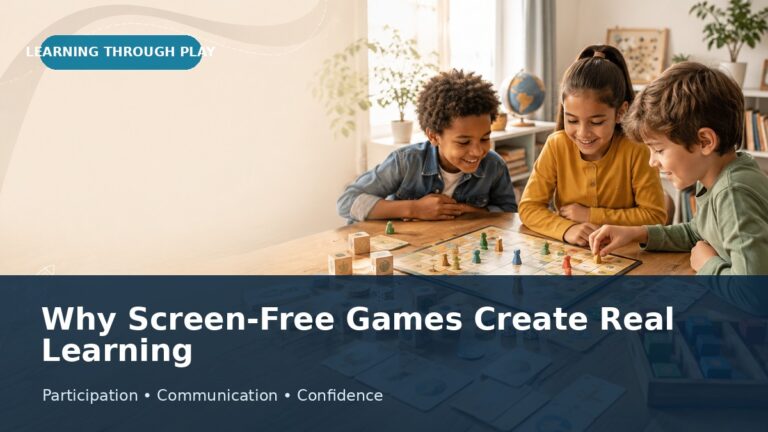
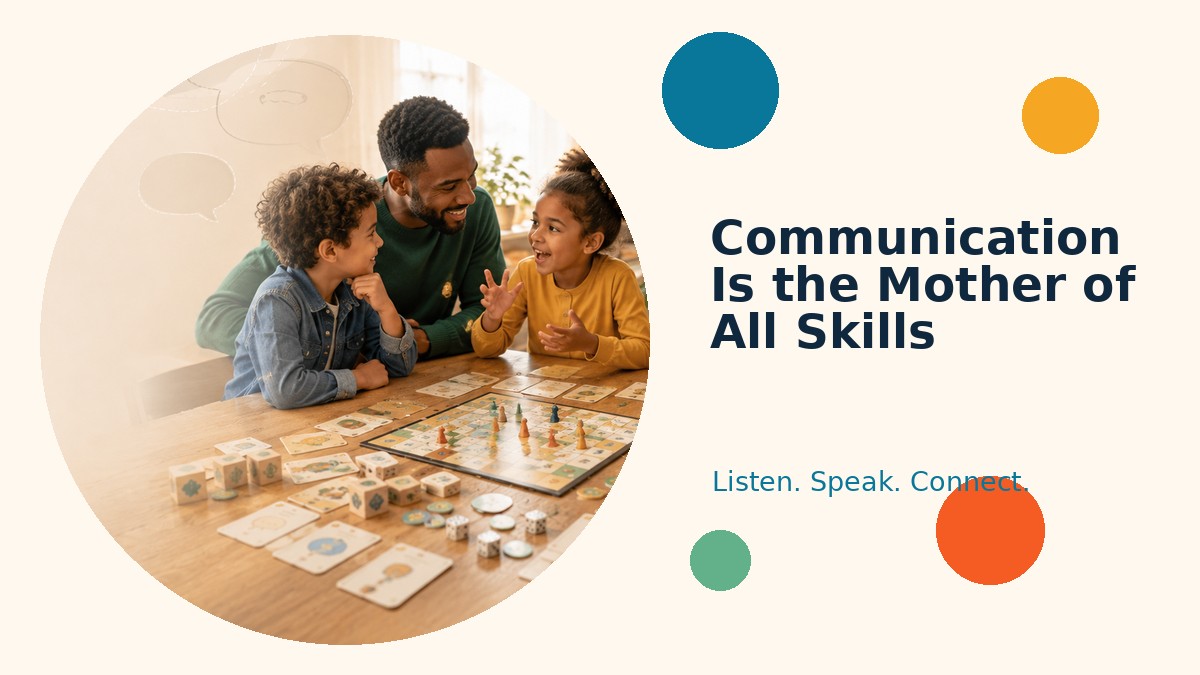
Children often communicate more freely when the conversation has a purpose. A card asks a question. A dice roll provides story images. A team needs a plan. A language challenge needs an answer. The focus is on the shared activity, so speaking can feel more natural and less like a formal test.
Games also make listening necessary. Players must understand the rules, follow another person’s turn, remember details and respond. Communication therefore becomes a living part of the activity rather than a separate lesson.
Thowl Games Designed Around Expression
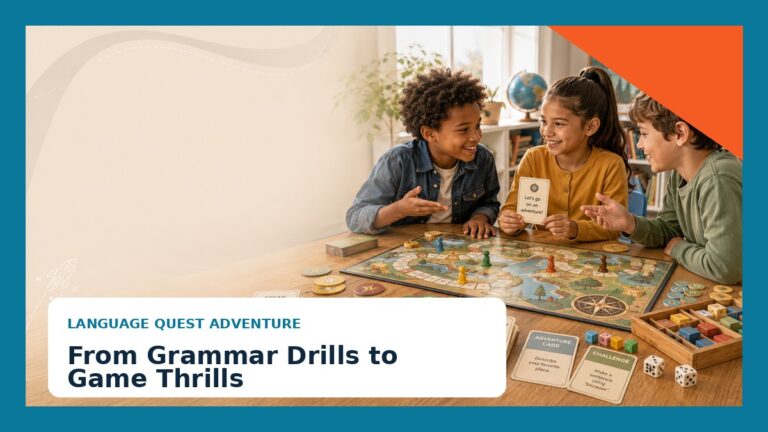
Language Quest Adventure brings together speaking, vocabulary, listening and sentence-building. Conversation Sparks encourages meaningful discussion. OTT – Storytelling Dice develops imagination and narrative skills. Grammar Dice helps learners construct and speak sentences in different ways.
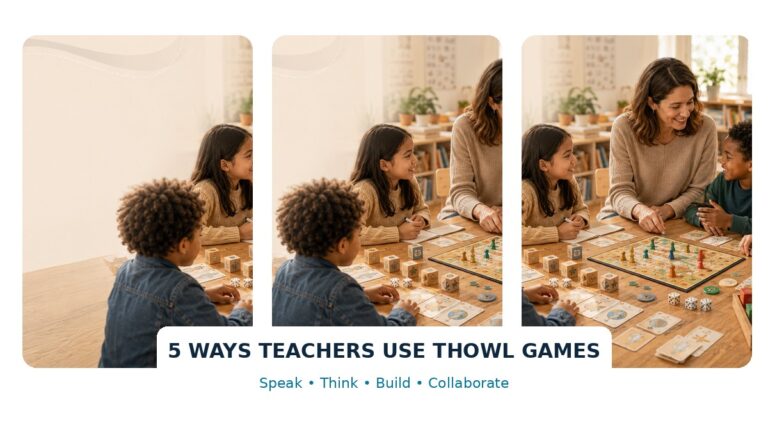
Even logic and construction games such as Cube Mines can develop communication when children plan a structure, explain a pattern or work as a team.
Confidence Grows Through Repeated Participation
A child does not become a confident communicator after one activity. Confidence grows through many small opportunities to speak, listen, make mistakes, try again and be heard. Play can create these opportunities repeatedly without making every response feel like an examination.
Communication is not just one skill; it supports every other skill.
Discover learning games that encourage children to think, speak, listen and create in the Thowl Games shop.