Time Management for Children: How to Balance School, Homework, Play and Screen Time
Time management does not mean filling every minute with work. It means learning what needs to be done, when it should be done and how to leave enough time for rest and play too.
Use a routine, not a military schedule
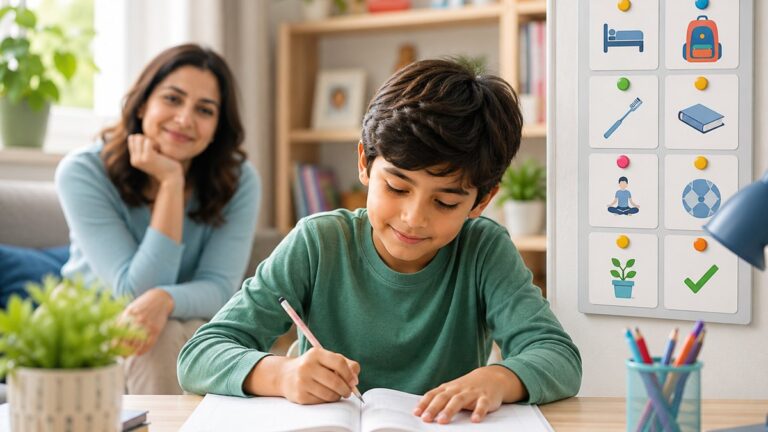
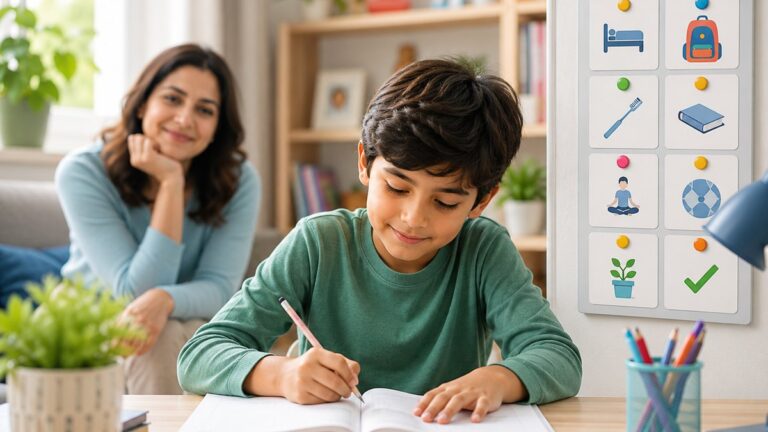
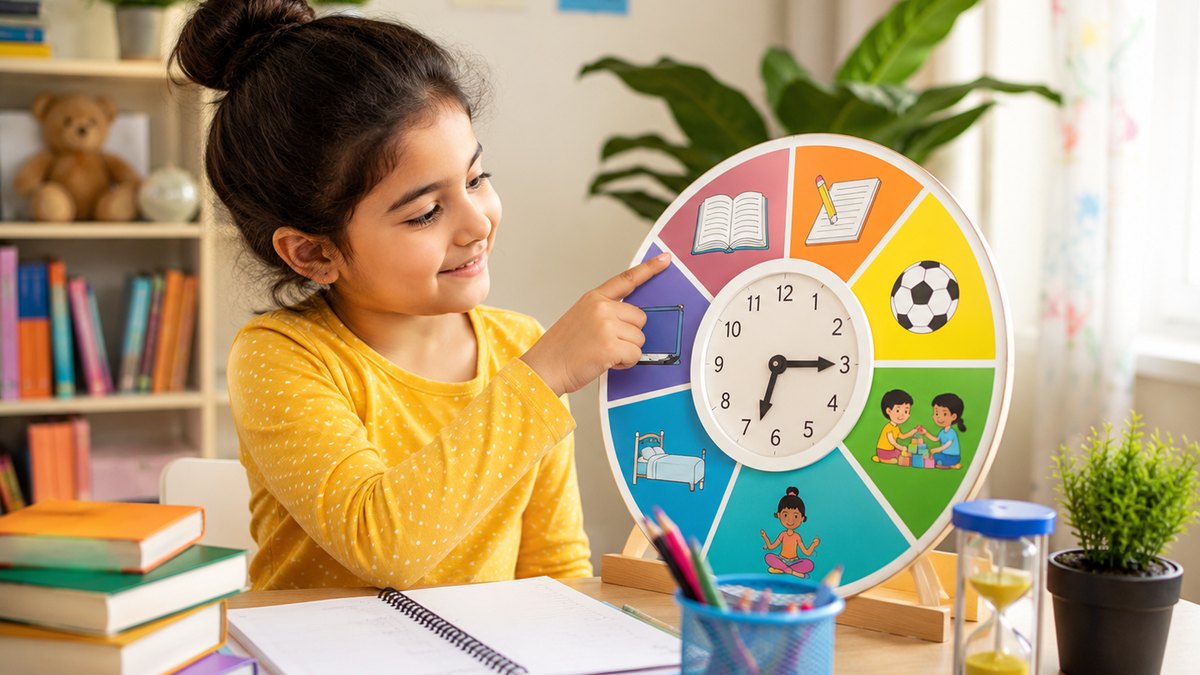
Time blocks such as after-school rest, homework, play, revision, family time and bedtime are often easier than minute-by-minute control.
Start with non-negotiable commitments
Put school, travel, tuition, sports, meals and sleep into the plan first.
Do not sacrifice sleep first
Good time management means using available time better, not simply staying awake longer.
Separate homework from revision
Homework is assigned work. Revision is reviewing and practising what has already been learned.
Decide the task before starting
“Finish Maths Exercise 6.2” is much clearer than “study.”
Give screen time a place
Recreational screen use works better with predictable boundaries than when it quietly occupies every empty moment.
Teach prioritisation
Urgent and important → do first. Important but not urgent → plan. Optional entertainment → after responsibilities.
Break large projects into smaller jobs
A project spread over several days is easier than an emergency the night before.
Let children gradually plan for themselves
The goal is not a child who follows a parent’s timetable forever; it is a young person who learns to manage their own time.
Good time management should make childhood less rushed, not more crowded.